Wednesday, 23 August 2017

9 Signs You Are Going To Become A Successful Man/Woman.

Yes, In The World Today “Success is fleeting” is a popular adage in business. You simply cannot dream or wish for success. You have to work at it constantly. Contrary to old school management thought, the road to success is never a straight path.
It is riddled with twists and turns, highs and lows, turbulence and calm. But it is not impossible to reach your destination if you are aware of these 7 signs that you are going to be successful.
You Survived Failure. Can you name anyone who succeeded without ever failing in anything in life? I thought so.
It’s highly unlikely that you can succeed without experiencing failure. Many of the world’s most successful businessmen, athletes and world leaders went through several incidents of failure before finding success.


1. You Lead Based on Values

If you want to succeed, it’s not enough that you know where you want to go. It’s more important to know how you will get there. And the answer to “How” can be found with the answer to “Who”.
Who are you?

Your core values are the guiding principles for every decision you make. It is forged from your life experiences.
Your values represent who you are. If you lead with your values, you will find success based on what you believe is right.
Values based leadership is the key to finding long-term, sustainable success.

2. You Know Your Purpose

Do you know what your purpose is? If no, then what makes you want to wake up every morning to do what you need to do?
If values are determined by “Who”, purpose is determined by “Why”.
Why did you choose this venture? Why did you decide on this career? Why did you take this direction?
According to Nobel Prize winning Psychologist, Daniel Kahneman, consumers couldn’t care less on the information that’s listed on the label. They purchase based on aligned purpose.
If they can identify the purpose of your product or service, they will patronize you. They understand why you do what you do and what your business is all about.
When you align purpose with your core values it creates direction by establishing your vision. Vision gives you clarity.
For successful people, fulfilling their vision motivates them to wake up every morning, refreshed and ready to face up to the day’s challenges.

3. You Prioritize Flexibility

The year 2000 brought in more than just a new millennium. It ushered events that forever changed the course of history.
The growth of the Internet, 9/11, the 2003 collapse of the equities market, the fall of Iran’s and Libya’s dictatorships, global warming, the 2009 Eurozone crisis, the rise of the mobile technology; these events all transformed the world as we know it.
In a Post-Cold War setting, everything has become VUCA: Volatile, Unpredictable, Chaotic and Ambiguous.
If you choose to maintain rigid, business models and strategies you will fail because you will not have the means to adapt to changes in business conditions.
But if you prioritize flexibility, you will have the foresight to anticipate change before it happens and implement appropriate revisions to strategy accordingly.

4. You Value Time

With all of the advances, efficiencies and innovations introduced by digital technology, there is one component that it can never change. That component is time.
Even the fastest computers and latest in smart technologies can never change the fact that there will always be 24 hours a day.
Thus while technology has enabled you to do things faster and more efficiently, what it really means is today you can do more things within the same amount of time.
For successful people, it is never about the number of hours worked but what they do during those hours that matter.
It is never about relying on technology to become efficient with time. Rather, it is about understanding the intrinsic value of time to become efficient with technology.One of the best ways to utilize technology is to hire virtual assistants. A Virtual Assistant is a person who works online from a remote location. Hiring virtual assistants is a cost efficient solution that generates greater productivity.
Several successful entrepreneurs have hired virtual assistants to become more efficient with their time. These include Tim Ferris, Pat Flynn and Michael Hyatt.

5. You Focus on Your Strengths

Old school management thought dictates that new growth can be found on areas of weakness.
If you subscribe to this school of thought, you will only succeed in one thing: Wasting time.
Can you imagine what would happen if the IT department took over sales and the Sales department managed all of your networking systems just for the purpose of building a new competence?
Even if they improved their level of proficiency, it will not be enough to contribute to the success of the company. In fact it may even detract from it.
If you’re successful you acknowledge the intrinsic value of time and know your venture is best served by capitalizing on your skills and current strengths.

6. You Build on Your Weaknesses

How would you define a weakness? In anything in life, if you are only “good enough”, that is a weakness.
You should not expect to know everything. The most successful people know that. However, it should not keep you from learning and working to get better.

This is why billionaires and business leaders like Bill Gates and Mark Zuckerberg are avid book readers.
Gates reads more than 50 books a year hoping to fine tune his knowledge on society and technology. Zuckerberg reads at least 2 books every month focusing on history and culture.
Warren Buffett, Oprah Winfrey and Tim Cook of Apple allocate 5 hours a week for strict learning. They read everything from books, manuscripts and volumes of research material.
If you are successful, you should never stop learning. As the Japanese say:
“If you stop learning, you stop existing.”

7. You Manage Based on Right Fit

Tony Hsieh the founder of Zappos said that when he interviews people for a job, he hardly looks at their credentials. He only sizes up the candidate if he or she is an ideal fit for the Zappos culture.
For years, Human Resource managers have focused on technical and fundamental competencies as the determining factors for hiring personnel. They overlook the fact that an organization is made up of different individuals with unique personalities.
It doesn’t matter if the person carries the highest references or recommendations. If he or she becomes disruptive, the organization will fail.
People can be trained to become more skilled and proficient. It is more difficult to change a person for what he or she already is.
Right Fit means to put together people who can thrive in the company culture. They share common values, understand your purpose and acknowledge your vision.
If you manage based on right-fit, your company can navigate safely through economic turbulence because will they move in the same pace and toward the same direction.
 
So how would you define success? Does it end when the journey has been completed?
For many of the world’s most successful people, success is a never-ending journey. Once a goal has been reached, they chart a course for a new one. Perhaps success only ends when you believe there are no more challenges to conquer.
Share:

Tips to Improve Your Business

1. Examine Your Business Plan

A business plan is basically designed to magnetize investors and to provide a blueprint of your business. It must illustrate the goals, objectives, strategies, and suggests modes of operations for your business. It is essential to Examine your business plan thoroughly. The following tips might help:
  • Assess your core activities to know about your succeeding products and services. Figure out problems to make more fundamental improvements.
  • Review your finances by considering cash flow, working capital, cost base, borrowing, and growth.
  • Conduct a customer market analysis to reveal market changes, new & emerging services, changes in your client needs and competitive activity.
  • Use your review to redefine your business goals by using a management consultant or by appointing an experienced non-executive director who can give an impartial assessment of endeavor every day.
  • To keep yourself organized you can even use a good business planning software like LivePlan. If you are an iPad user, you can consider the StratPad app.

2. Hire the Right People

Hiring the correct individual is crucial to the success of your business, and that is why entrepreneurs ought to have a proper hiring method when searching for new workers. Here are some tips to avoid bad hiring:
  • Give a detailed description for each position in the organization that reflects the responsibilities, level of skills and experience required.
  • Make an evaluation scorecard to grade and compare the performance of candidates.
  • Test candidates by asking them to complete a task that requires the skills for that particular hiring position.
  • Look beyond the CV and hire the most potential employee.
  • Let Experience speaks than Reasoning
Avoid costly and painful mistakes by putting time and work into finding the right people. Make employee assessment easier by having some sort of automation like human resource information system in place for HR tasks to help the business thrive. Cloud-based People HR software is one of the recommended tools that offers complete hr management to take your business to the next level.

3. Use High Effect Marketing

Many smaller organizations are trying to get the most out of their marketing with a tight budget as staying in business without a marketing budget would be near impossible. Use the following tips to drive the high impact marketing:
  • Leverage online review sites to boost online sales.
  • Build a social community.
  • Write in a voice that reflects your brand identity.
  • Create multipurpose content.
  • Make sure your copy is coherent, logical and organized.
  • Ask people to take action.
  • Optimize for local search.
  • Team up and co-host an online event.

4. Build A Connection with Your Customers

Be interactive with your existing clients via email, phone or message. Communicate with your customers to wish & acknowledge and indicate them that your business is all set to assist them once again. Moreover, invite them for a catch-up in order to grab the opportunity of taking the relationship to the next level. Here are some tips to rekindle customer love:
  • Give an immediate response.
  • Build your reputation as a trustworthy business.
  • Invest proper time and effort in order to get something out of it.
  • Treat every client as your most important one.
  • Try and understand their taste

5. Motivate Your Employees

Employees that work with customers on a regular basis probably have smart ideas regarding a way to improve service or the standard of your product. Take time to pay attention to those ideas and seriously think about their implementation. This motivates workers to focus more, and their ideas may economize and move the business forward. Furthermore, provide performance result for improvisation by using successful response generated techniques described below:
  • Get to the main point rather than spending time on the insignificant statements.
  • Be certain in tracing what behavior requires amending and offering a real solution on how to develop it.
  • Make sure that the employee perceives your assumptions and how his presentation helps the company and the business.
  • Never put down the individual.
  • Educate your employees in right direction to make them more productive and target-oriented.

6. Put Competitive Pricing

In setting a pricing strategy, value has to be the ultimate tool. This helps by providing greater benefits and develops client satisfaction. Operational moves fall in the below 3 basic categories that increase profits and cut expenses:
  • Adding lots of new customers.
  • Chasing business with technology.
  • Creatively discovering ways to expand price, so customers pay extra money.
You can simply improve your business operations by following these approaches. The key is to have a vision of what you want to achieve, where you want to go, and what you want the business to become.
Share:

The First Man On Space - Yuri Gagarin-

April 12 was already a huge day in space history twenty years before the launch of the first shuttle mission. On that day in 1961, Russian cosmonaut Yuri Gagarin (left, on the way to the launch pad) became the first human in space, making a 108-minute orbital flight in his Vostok 1 spacecraft. Newspapers like The Huntsville Times (right) trumpeted Gagarin's accomplishment.


Mercury astronaut Alan Shepard became the first American in space less than a month later.

The first cooperative human space flight project between the United States and the Soviet Union took place in 1975. The Apollo-Soyuz Test Project was designed to test the compatibility of rendezvous and docking systems for American and Soviet spacecraft and to open the way for future joint manned flights.

Since 1993, the U.S. and Russia have worked together on a number of other space flight projects. The Space Shuttle began visiting the Russian Mir space station in 1994, and in 1995 Norm Thagard became the first U.S. astronaut to take up residency on Mir. Seven U.S. astronauts served with their Russian counterparts aboard the orbiting Mir laboratory from 1995 to 1998. The experience gained from the Mir cooperative effort, as well as lessons learned, paved the way for the International Space Station.

In-orbit construction on the Station began in November 1998, and it has been staffed non-stop with international crews since November 2000. The first Station crew, made up of U.S. commander Bill Shepherd and cosmonauts Yuri Gidzenko and Sergei Krikalev, was launched on board a Russian Soyuz spacecraft. The crew returned to Earth on the Space Shuttle Discovery in March 2001.
Share:

Tips on How to Talk to People

Hello Do you want to overcome shyness or anxiety and be confident and charismatic? Do you want to make effortless conversation with anyone, make friends and get dates easily? i think this few tips can be of help
 Scroll down to read this article.Make no mistake about it: in today’s world, knowing how to talk to people is one of the most important virtues you can possess.
If you don’t know how to talk to people it’s hard to make friends, build a social life, grab the interest of the opposite sex or get ahead in your career. But if you do, a whole lot of prospects open up in your life.

Part1: The Conversation Formula

Basically, there are 3 major components of conversation: 1) asking questions, 2) disclosing information, and 3) changing topics. Do these 3 things right, and you’ll be able to talk to people in all sorts of social settings.
Let’s take a better look at each one of these 3 components and see how you can apply them effectively in conversation.

Step 1: Asking Questions

Questions are the best conversational tool you have to get the other person to share information and engage in the conversation. Thus, you get to know them and their subjective world.
Many books and articles on making small talk will give you lists of questions to use in conversation and encourage you to memorize them. I disagree with this approach entirely.
I believe questions work best when they are genuine, when they reflect an authentic curiosity you have. If you just ask about something because you think you should, but you don’t really care about it, that will usually show.
When you’re having a chat with someone, my advice is to always think about what you honestly want to know about the other person. Then ask questions based on this.
I, for instance, am very interested in people’s careers. So I often ask people I just met “What do you do?” But if you don’t really care about this stuff, by all means, don’t ask about it. Employ your own questions.

Step 2: Sharing Information

A common mistake  that individuals who don’t comprehend how to talk to people make is they ask lots of questions to get the other person to share information, but they don’t share information themselves.
Thus, they end up bombarding their conversation partner with question after question, and the entire discussion feels more like an interrogatory.
A quality conversation combines receiving information with giving information. Even if the other person doesn’t ask you a lot of questions, don’t be afraid to disclose yourself and to share information.
For instance, if I’m on a train and the person next to me is reading a book, and I want to start a conversation with them, I might ask them “What are you reading?” After they tell me the name of the book, I might ask them “What’s it about?”
But after they answer, I usually won’t ask yet another question. Instead, I’ll make a comment apropos what they said about the book, something simple and genuine, and then I’ll tell them a bit about a book I’ve read recently and I enjoyed.
So I’ll combine asking questions with sharing information. This is what makes a conversation work.

Step 3: Changing Topics

A 5-minute conversation can be on a single topic. But long conversations typically need to go through several topics. If you want to have long conversations, which tend to build the deepest connections with people, it’s important to move it from one topic to another.
When you feel the topic you’re discussing is drying out, don’t let the conversation die. Move it to another topic.
My rule of thumb is to try and keep the topics related. For example, after I talked with a person about books for a few minutes, it makes sense to move the conversation to movies, because it’s a related topic. And from one connect topic to another, I can take the conversation anywhere.
However, it is absolutely fine if you sometimes make big shifts in the conversation subject. For example, you move from books to “So, what do you do for a living?” That’s also a normal part of conversation. Just don’t do it every 30 seconds.
By asking questions, sharing information and changing topics, you effectively make a conversation happen. You get to know the other person, they get to know you, you cover a range of topics, and you connect with each other.
The truth is basic conversation isn’t exactly rocket science.
However, I can tell you there are plenty of people who, even after they understand these principles thoroughly, still have a hard time talking to others. Add it’s not a problem related to lack of knowledge, it’s a problem related to conversation confidence.

Part 2: Building Conversation Confidence

You can have questions to ask, yet not ask them because you fret you’ll come across as rude or impertinent. You can have things to say but not say them because you fear they’re not interesting. And you can have topics you want to talk about but not do so because you worry you’ll make a fool of yourself somehow.
You see, knowing how to talk to people and being able to talk to people are two very different things.
You can understand the rules and principles, but if you have fears like the ones I mentioned (which are usually unfounded), you’ll hesitate, you won’t say very much, you’ll stumble over your words when you do, and your conversations will still be sloppy.
The only solution to this problem is to overcome your limiting beliefs and build conversation confidence. This transformation is what you should focus on above all.
 
When you have positive beliefs about yourself and you’re confident, you don’t second-guess yourself, you instinctively know what to say, you are natural and you are willing to take risks in social interactions.
At the end of the day, this is what gives you the ability to talk to people effortlessly and build the relationships you want with others, if this really help, share and comment below.
Share:

Real-Life Ways To Become A Billionaire -Among Best Keys-


Becoming a billionaire seems like a great goal, but unfortunately it's only a dream for most of us. The thing is, many billionaires didn't start out as such. Some certainly had economic and educational advantages, but even without those, their smart decisions and business choices, plus a few characteristics that can't be overlooked, led them from Point A to Point B (Billionaire). So, what can we learn about our own real-life options for becoming billionaires? (More than 70 years after his death, this man remains one of the great figures of Wall Street, i know we love hearing that and we love if such is you GOOD.


First things first: find a way to make money. Four of the most oft-methods of money making in the world of billionaires are inventing, investing, innovating and being an entrepreneur, but remember that how you pursue your billions is just as important as what you do to get them.

Do This: Invent

Inventing is a tough road to take, but if you've got the smarts to successfully create, patent, produce and market a product that people need (and thus, will buy in droves), you can build your future billionaire life on it. Successful inventions aren't necessarily complicated or high-tech items, either; James Dyson invented a better vacuum cleaner, and Gianfranco Zaccai invented a better mop, the Swiffer. Seems like things that help people clean more efficiently might be a good market to pursue.

Do This: Innovate

Innovation is the fine art of considering a current mainstream market and finding a creative way to improve the current offering. Successful innovators will identify the real needs behind customer demands, and will meet them with a smarter, better, more efficient product, or with a service that provides more than its competitors, or with a business that works in a way just different enough to stand out from the rest. IKEA founder is a great example of innovation leading to billions; furniture doesn't seem like a very exciting market, but his approach of providing modular, economical pieces with a modern flair from Sweden and other European designers and manufacturers to a global market has taken him all the way.

Don't Do This: Think You Know It All

The moment you think you have nothing left to learn is the moment you kill your potential for becoming a billionaire. Especially if you're interested in building your wealth through inventing or innovating, you have to be curious, open-minded and always learning. Those qualities allow you to look at old things in a new way, to see the potential for change and profit where others see only what already had been done.

Do This: Invest

Warren Buffett, the self-made billionaire, is famous for his frugal ways and for his smart investments. Investing, of course, requires a little seed money and some accurate insight into what investments are smart and what are a waste of money. If you can follow in the footsteps of billionaire investors like Buffett, then this might be the route for you.

Don't Do This: Make Flashy Investments

The latest and greatest is always fun to talk about, and one of the pitfalls of would-be billionaires is to jump in on the "next big thing" which doesn't always turn out to be so big. Investors who make billions from their investments avoid flashy, fun and high-risk picks and instead choose those with long-term potential to provide great returns. Real estate, energy, steel, telecommunications, pharmaceuticals and energy are among the picks, while high-tech and intriguing but risky options may go either way.

Do This: Be an Entrepreneur

The third option for becoming a billionaire is in the time-honored tradition of entrepreneurial pursuits. Starting a business and taking it to success isn't always easy, but for those with good business sense and the ability to spot start-ups that have potential to be great, entrepreneurship can be the vehicle to great wealth. Billionaire entrepreneurs might work in one of two ways: either by coming up with a great idea and taking it all the way, as in the case of Bill Gates and Microsoft. Or by spotting someone else's good idea and investing in it early on, helping to carry it to huge success. Both are viable ways to reach success that can get you into the billions of dollars when it comes to your own net worth. (Quit your job; be your own boss and earn a paycheck.

Don't Do This: Quit Too Soon

Entrepreneurial types who succeed must realize that success rarely comes overnight. One business idea might not pay off, but the next might. Or your company might hit a low point, and you have to make the choice to hang on with it and bring it back or let your dream die and your debt increase. It's not easy to build something from scratch, especially when your something is a fortune of billions. Time is on your side, if you don't rush it.

The Bottom Line

Of course, luck has something to do with success; it helps to be in the right place at the right time. However, if you don't know what to do when you're there, luck won't help you out much. Smart choices, smart investments and long-term learning and growing will however; once you hit that first billion, remember you heard it here Haha. your comments are needed..
Share:

The Secret of Success? 7 Good Tips That Teach How To Get Rich

Read this post to the End, You Must Grab Something...
The question is that: how do the rich get rich?? Some are born that way and some get lucky. Others have advantages most of us will never have. But if you ask the world’s self-made billionaires how they achieved success, most will tell you it’s not that they’re necessarily smarter than everyone else and they didn’t rely on a some super-secret formula the rest of us don’t know about. Instead, they often credit their success to a mixture of passion and perseverance, plus a healthy dose of stubbornness.
That advice is all well and good, but it’s a little vague. We wanted to dig a bit deeper and find out what some of the world’s most successful people really think you need to do to get rich. Here are seven incredibly successful people on what they believe you need to do to add those extra zeros to your bank account balance.

 1. Save your money


Entrepreneur and Dallas Mavericks owner Mark Cuban is worth $3 billion. He built his wealth from the ground up, and now he doesn’t hesitate to dispense advice to those who hope to replicate his success.
One of Cuban’s tips for getting rich? Don’t blow your cash on stupid stuff. Here’s one of the tips he shared in a blog post entitled “How to Get Rich”:
“Save your money. Save as much money as you possibly can. Every penny you can. Instead of coffee, drink water. Instead of going to McDonald’s, eat mac and cheese. Cut up your credit cards. If you use a credit card, you don’t want to be rich. The first step to getting rich, requires discipline. If you really want to be rich, you need to find the discipline, can you?”

2. Go against the grain

warren buffett
Photo by Bill Pugliano/Getty Images
The “Oracle of Omaha” is a popular source of investing wisdom, not surprising given that he’s the third-richest man in the world, with a net worth of $72.7 billion. Warren Buffett’s consistent approach to investing has been key to his success. He’s made his fortune by bucking trends and betting on companies that have been overlooked by other investors. Here’s how he summed up his approach in the book Buffett: The Making of an American Capitalist:
“I will tell you the secret of getting rich on Wall Street. Close the doors. You try to be greedy when others are fearful and you try to be very fearful when others are greedy.”

3. Don’t be timid

Shrinking violets and wallflowers aren’t good candidates for future billionaire status. If you want to get rich, you need to be bold enough to take chances, even if your ideas seem a little crazy. That risk-taking approach paid off in a big way for Eli Broad, the founder of KB Homes, who has a net worth of $7.1 billion.
Back in the mid-1950s, Broad had an idea that he could make money by building houses without basements, which would make them affordable for more people. The fact that he had no experience in construction or real estate didn’t stop him from pursuing his ideas, as he explained in a 2006 commencement address at UCLA’s school of arts and architecture:
“No one ever made a million bucks by being cautious or timid or reasonable. I was 22 years old and recently married when I had the crazy idea that I should give up my career as a CPA and become a homebuilder. I didn’t know anything about building houses. Sometimes the craziest ideas are the ones that yield the greatest payoffs.”

4. Make something yourself

Relying on others for your success is a recipe for disaster. At least, that’s the lesson that Forrest Mars, Sr., learned from his time working at Mars, Inc., his father’s candy business. At the time, Mars sourced all its chocolate from its competitor, Hershey’s. After quitting the family business, Mars (who was worth $4 billion at the time of his death in 1999) moved to Europe, got a job in a candy factory, and figured out how to make chocolate himself. Then he invented the Mars bar. He eventually returned to the family business, and it’s now the sixth-largest privately held company in the U.S.
“If you want to get rich, you gotta know how to make a product. And you aren’t going to hire anybody to make a product for you to make you rich,” he was quoted as saying in the book Business Builders in Sweets and Treats. He also made it clear that he wasn’t just a guy who made chocolate bars. “I’m not a candy maker. I’m empire minded,” he explained.

5. Recognize opportunity

eric schmidt
Photo by Win McNamee/Getty Images
Great success may sometimes seem like it’s a matter of luck, but really it’s a matter of knowing when to seize a great opportunity, says Eric Schmidt, former CEO and current executive chairman of Google (net worth $10 billion). He should know. Schmidt didn’t found Google, but he was smart enough to accept a job offer there in 2001. A big part of success is just trying to be in the right place at the right time, he said in a commencement address at Carnegie Mellon University in 2009.
“Don’t bother to have a plan at all. All that stuff about plan, throw that out.  It seems to me that it’s all about opportunity and make your own luck. You study the most successful people, and they work hard and they take advantage of opportunities that come that they don’t know are going to happen to them. You cannot plan innovation, you cannot plan invention. All you can do is try very hard to be in the right place and be ready.”

6. Take care of yourself

Justine Musk may not be a billionaire herself, but she has a pretty good idea of what makes them tick. The ex-wife of Tesla founder Elon Musk (net worth: $13 billion) has seen what she calls “extreme success” firsthand, and she knows that getting to that level of wealth isn’t easy. Not only to you need to be “obsessed,” as she explained in a Quora post, but you need to be in peak physical condition:
“It helps to have superhuman energy and stamina. If you are not blessed with godlike genetics, then make it a point to get into the best shape possible. There will be jet lag, mental fatigue, bouts of hard partying, loneliness, pointless meetings, major setbacks, family drama, issues with the Significant Other you rarely see, dark nights of the soul, people who bore and annoy you, little sleep, less sleep than that. Keep your body sharp to keep your mind sharp. It pays off.”

7. Follow your passion

Most billionaires agree that passion is important if you’re trying to achieve great success. Some would say it’s the most important thing — that you should concentrate on your passion and then let success follow from that, rather than focusing on the money first. Jim Koch, who founded the Boston Beer Co., said that’s what helped transform him into a billionaire.
Long before craft beer was a national craze, Koch (the son of a brewer) decided to dedicate himself to brewing quality beer, which was then hard to find in America. His quirky passion paid off handsomely, but getting rich wasn’t the point, as he explained in an interview with Business Insider:
“The most common thing I remind people of is to only pursue something you love, because a small business is going to be very demanding of your time, your energy — it just eats your life. And if you’re doing something you love, then you will accept and even enjoy that. If you’re just doing it to get rich, you’re gonna lose heart. I tell everyone, getting rich is life’s biggest booby trap. It comes down to what would you rather be, happy or rich? I say do what’s gonna make you happy.”
 So you have seen this all, one thing you will do for us is to try and practice and give us feedback, You are free to add the one you feel i missed, in comment box below. NOTE: YOUR COMMENTS AND SHARE IS VERY MUCH IMPORTANT TO US.
Share:

Tuesday, 11 July 2017

Top 10 Most Richest Teen Celebrities

There are people living like Gods on earth, buying islands for themselves and owning in abundance, things that we can never imagine to have. We call them celebrities. These days even teen celebrities can be filthily wealthy earning in billions, but each one of us has that curiosity to know how much exactly our favorite celebrities earn, and of course who are the richest among them. Here’s the detailed list of the top 10 richest teen celebrities.

1. Justin Bieber

justin

The popular teen singer is the richest of all teen celebrities. His net worth is $110 million. His talent was found on YouTube 5 years ago and the famous singer Usher signed a contract with him. It was then that he started his musical journey.

2. Miley Cyrus

miley
Next is Miley Cyrus with a net worth of $120 million. She is the daughter of Billy Ray Cyrus who used to be a superstar like she is now. Apart from singing Miley is now into acting too. She made her debut in The Last Song.

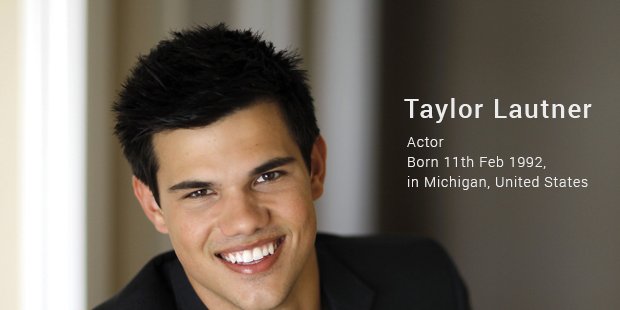
3. Taylor Lautner

Taylor
 The “Twilight” star, Taylor Lautner has made over $24,000,000 with the release of The Twilight sagas in which Lautner plays Jacob. The series has reached him to where he stands today.

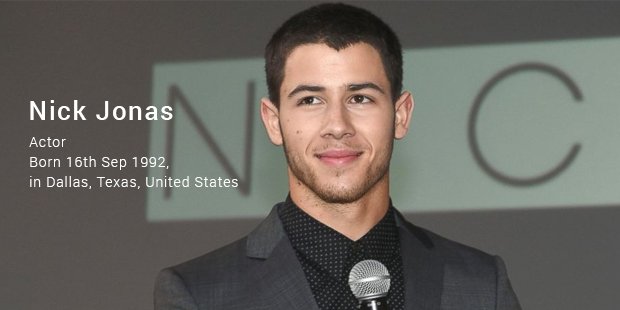
4. Nick Jonas

Nick
Jonas has a net worth of $18 million. He has earned the wealth via music and TV shows. He first was solo singer and later joined a group of boys to form a band of singers. He is also a songwriter and actor.

5. Dakota Fanning

Dakota
She has worked in more than twenty movies and owns a net worth of $16 million. First screened in “War of the Worlds” with Tom Cruise, the actress was chosen to work with Sean Penn after that in the movie, “My Name is Sam”.

6. Angus T. Jones

Angus
With a net worth of $15 million, Jones is well known as “Half” from the popular comedy TV series, “Two and a Half Men”. He plays the role of Jake, who is a child in the series. He earns $500,000 signing bonus for playing Jake Harper in the series.

7. Jaden Smith

Smith
Smith’s net worth is $8 million and he is known for his acting, rapping, songwriting and dancing. This incredibly talented child-star, started working by appearing on the Smith produced sitcoms. He also acted in the blockbuster movie, The Pursuit of Happiness with Will Smith.

8. Selena Gomez

Gomez
Selena Gomez is a famous teenage singer, dancer and actor. She is also into fashion and TV. Her net worth is $5.5 million. She also works with the UN on several projects and was the UNICEF Goodwill Ambassador as well.

9. Willow Smith

Willow
Willow Smith’s net worth is $4 million. She is a singer and an actress. She is the daughter of Will Smith who is also a singer and actor. She has worked with her father in the movie, “I Am Legend”.

10. Elle Fanning

Elle
Elle Fanning’s net worth is $2 million. Her source of income is film and TV. She made her Hollywood debut with the movie, “I am Sam” when she was only 4. Now she holds multiple Awards
Share:

Top 10 Richest Website World Wide.

 HERE ARE THE LIST OF TOP 10 MOST RICHEST AND BIGGEST WEBSITE AND THEIR NET WORTH.

1. Google

Google
Annual Revenue – $21 Billion
Ever imagine life without it now? Google is an Internet company that specializes in Web-based products and services such as cloud computing, search, software, and online advertising technologies. Founded by
Larry Page and Sergey Brin, the internet giant has its headquarters in the United States. Most of the revenue comes from AdWords, an online advertising service that puts ads near the list of search results.

2. Amazon

Amazon story
Annual Revenue – $19 Billion
A highly successful American e-commerce company, Amazon was founded by Jeff Bezos in 1994. Started as an online bookstore, the company has gone on to sell a variety of other products such as electronics, food, jewelry, apparel, furniture, and video games. Amazon is known for its Kindle e-book readers, Fire tablets, Fire Phone, and Fire tablets.

3. Yahoo

yahooooooo
Annual Revenue – $7.2 Billion
A multinational Internet company, Yahoo is best known for its search engine Yahoo Search, and its extremely popular web portal. Founded by Jerry Yang and David Filo, Yahoo has several web related services such as Yahoo Mail, Yahoo News, and Yahoo Groups.

4. eBay

ebay
Annual Revenue – $6.2 Billion
Established by Pierre Omidyar in 1995, eBay Inc. is an e-commerce company that manages the website eBay.com, involved in auctions and shopping.

5. MSN/Live

msnahdfkjasdhf
Annual Revenue – $3.2 Billion
The Microsoft Network, launched in 1995 by Microsoft, is a collection of Internet websites and services. The MSN brand name was used to popularize other web-based services such as Messenger and Hotmail.

6. PayPal

paypal company
Annual Revenue – $2.25 Billion
PayPal was founded by Elon Musk, Ken Howery, Luke Nosek, Max Levchin, and Peter Thiel. It is an e-commerce business that allows money to be transferred via the Internet.

7. iTunes Store

iTunes
Annual Revenue – $ 1.9 Billion
The iTunes Store is a digital media store run by Apple Inc. since 2003. Since 2010, it has been the biggest music vendor in the world. Till day, the store gathers great traffic from all the users of iPhone and iPad products.

8. Reuters

Reuters
Annual revenue – $1.8 Billion
A global news agency founded in 1851, the Reuters website is a very popular spot for news all over the world. The news from this site is popular for its real time rich content.

9. Priceline

priceline
Annual Revenue – US$ 1.884 Billion
A commercial website that offers discounts on travel-related expenses such as flight tickets and hotel reservations, Priceline was founded by Jay S. Walker in 1997.

10. Expedia

Expedia company
Annual revenue – US$ 1.447 Billion
Set up in 2001 by Rich Barton and Lloyd Frink, Expedia is a travel website company that helps customers make hotel reservations, book flight tickets, and other travel-related activities.
Most of the names described previously are familiar to somebody who has even basic skills in using the World Wide Web and that in itself is proof of the success and popularity of the website.
Share:

List of 10 Most Expensive Big Motor Bikes in the World.

 WORLD WIDE MOST EXPENSIVE MOTOR BIKES


Big bikes have always been a dream for most men, especially those who love the open road and riding like there is no tomorrow. Huge two-wheelers that adorn the long open highway or the busy concrete streets of the city are a manly sight, whether it be a heavy cruiser like a Harley Davidson or a super sports bike like the BMW F800ST.
Big bikes are expensive right from the moment they roll out the assembly line, which means only a select few are financially capable of owning and maintaining them. However, some of these enormous two-wheeled beasts of the road are ultra-priced and are meant for those whose passion for big bikes is unparalleled and whose wallets are thick. Here are the 10 most expensive big bikes in the world.

#10 NCR Leggera 1200: $72,000

leggera
Lightweight is something that most people can’t stamp on huge motorcycles
, but the word seems to find its place with the NCR Leggera 1200. The bike’s frame is fashioned from handcrafted titanium and the brakes are made of carbon fiber. This enabled the Leggera 1200 to weight 47 kilos lighter than most stock bikes. Lightweight? Yes. Sturdy? Even more so. Powerful? You bet.

#9 Vyrus 987 C3 4V V: $91,700

vyrus
Most people are not familiar with the name Vyrus and that is a good thing. Only a few are aware that Vyrus boasts several of the world’s most powerful motorcycles in production and the Vyrus 987 C3 4V V is one of them. Aesthetically, this baby looks like a motorcycle from the way ahead future but its steering and handling are superb. Powered by a Ducati-sourced 1198cc V-twin engine, outrunning this big behemoth from Vyrus seems next to impossible.

#8 MV Agusta F4CC: $120,000

agusta
This proud Italian super bike boasts being very rare, as there are only 100 of these road monsters built. Beneath the shell is the roaring F4CC’s 4-cylinder engine, which can generate 200 horsepower with relative ease. That translates to a top speed of 195 miles an hour. Whether it’s worth the huge price or not, you decide.

#7 MTT Turbine Streetfighter: $175,000


Installed with the beastly Allison turbine engine from Rolls Royce, the MTT Turbine Streetfighter can easily generate 320 horsepower. That translates to 249 miles per hour tops.  Its aerodynamic tubular aluminum frame gives this big bike an added boost while the 17-inch wheels of carbon fiber make it lightweight, which then decreases the adverse effects of drag. And just as you thought it can’t get any better, it can. The MTT Turbine Streetfighter can be upgraded to 420 horsepower. And you know what that means.

#6 NCR M16: $232,500

ncr
It’s hard to imagine that the NCR M16, as beautiful and powerful as it is, is just a modification of something else. But that is the case. This super bike is the berserker version of the already powerful Ducati Desmosedici RR. Flaunting a carbon fibre frame, swingarm and wheels and ceramic matrix composite for brakes. NCR M16 is also a very light super bike. The V4 engine, on the other hand, proves to be a perfect complement to the bike’s overall construction. Giving the bike 200 horsepower, this beast of the road is clearly a one fast super bike.

#5 Ecosse FE Ti XX: $300,000

ecosse
Exotic yet functional, Ecosse’s super bikes are built using the rarest materials yet still adhering to the highest standards. The FE Ti XX is all that and then some. The bike’s frame is made of titanium and flaunts a hydraulic clutch and an exposed carbon belt drive. Its aluminum engine can generate 225 horsepower, giving the bike a serious kick once it starts roaming the road.

#4 Legendary British Vintage Black: $400,000

vintage
Built in Great Britain, this vintage big bike is highly coveted for its history rather than performance. That said, two-cylinder engine gives this bike a big roar. That means this is not an ordinary two-wheeler, even if it’s an oldie.

#3 Dodge Tomahawk V10 Superbike: $555,000

tomahawk
One look and you know the Dodge Tomahawk V10 is something special. Built with the monstrous 8.3 liter V10 engine of the iconic Dodge Viper, this super bike goes from 0 to 62 miles an hour in 2.6 seconds. With 500 horsepower revving and roaring, the Tomahawl V10 Superbike can go for a top speed of 420 miles an hour.

#2 1954 AJS 500 cc Porcupine: $675,000

porcupine
One of the rarest super bikes built in the 1950s, the 1954 AJS Porcupine’s body is made of aluminum alloy and is powered by a 500 cc, DOHC twin engine. More valued because of its history, the Porcupine sold after an auction at Bonhams in 2011 for a very high price.

#1 Million Dollar Harley Davidson: $1 Million

harley
The only Harley Davidson that carries the $1 million price tag, this particular super bike is the most expensive in the world. But while some would think the bike’s powerful six cylinder engine and frame give the Harley its value, it really stems from its unique styling, care of artist Jack Armstrong. Dubbed “Cosmic Starship”, the bike features Armstrong’s unique art approach, which is called Cosmic Existentialism.
Share:

Monday, 3 July 2017

20 Never to Miss Recommendations for Your Blog.

Here today, we have been receiving much of emails asking for advice about starting a blog, about how to blog, about blog topics, and about creating meaningful content. These are the answers and recommendations we tend to give.


  1. Find Your Niche. You needn’t have a niche, but it helps. When learning how to be a blogger, it’s important to ask yourself what you’re passionate about. Running? Cooking? Being a parent? Have you found your passion? If so, whatever it is, write about that. If not, then you must first find your passion. (Note: We generally recommend that people don’t start a blog about minimalism or the paleo diet or any other heavily saturated topic. But what we really mean when we say this is: don’t create a blog about something unless you have a unique perspective. If you’ve embraced simple living and have a unique perspective, then by all means have at it. Enjoy yourself.)
  2. Define Your Ideal Readers. Once you’ve found your niche, you need to know who will be reading your blog. For example, we blog about living intentionally. Thus, our ideal readers are people who are interested in exploring minimalism so they can clear the path toward more meaningful lives. If you want to write about your newborn baby growing up, that’s wonderful: your ideal readers are probably your friends and family. If you want to write about restoring classic cars, that’s cool, too. Tailor your writing to your readers (whether it’s your family or local community or whoever else will read your blog).
  3. Add Value. Your blog must add value to its readers’ lives. This is the only way you will get Great Quality Readers to your site (and keep them coming back). Adding value is the only way to get someone’s long-term buy-in. We both learned this after a decade of leading and managing people in the corporate world.
  4. Be Original. Yes, there are other blogs out there about the same thing you want to write about. Question: So why is your blog different? Answer: Because of you. You are what makes your blog different. It’s about your perspective, your creativity, the value that you add.
  5. Be Interesting. Write epic, awesome content. Especially if you want people to share it with others.
  6. Be Yourself. Part of being interesting is telling your story. Every person is unique, and your story is an important one. The important part of storytelling, however, is removing the superfluous details that make the story uninteresting. A great storyteller removes 99% of what really happens—the absorptive details—and leaves the interesting 1% for the reader.
  7. Be Honest. Your blog needs to be authentic—it needs to feel real—if you want people to read it. You can be your blog, or your blog can be you. That is, do you really embody the stuff you write about? If not, people will see through you. “Be the change you want to see in the world,” is the famous Gandhi quote. Perhaps bloggers should build the blog they want to write for the world.
  8. Transparency. Being transparent is different from being honest. You needn’t share every detail about your life just for the sake of being honest. Always be honest, and be transparent when it adds value to what you’re writing. (You won’t ever see pictures of us using the restroom on our site, because that’s just not relevant.)
  9. Time. Once you’ve learned how to start a blog, you’ll learn that blogging takes a lot of time, especially if you’re as neurotic as we are (we spent over 10 hours testing the fonts on this site). And see those black Twitter and Facebook icons in the header? We spent hours on those, deciding what was right for us). That said, once you have your design set up, don’t tweak it too much. Instead, spend the time on your writing.
  10. Vision. The reason our site design looks good is because we have a great host, we have a great theme, and most important, we had a vision of how we wanted our blog to look. Once we had the vision, we worked hard to make that vision a reality. (Note: neither of us had any design experience prior to starting a blog.) It’s hard to create a beautiful blog if you don’t know what you want it to look like.
  11. Find Your Voice. Over time, good writers discover their voice and their writing tends to develop a certain aesthetic, one that is appealing to their readers. Finding your voice makes your writing feel more alive, more real, more urgent.
  12. We Instead of You. Use the the first-person plural when possible. Statements of we and our are more powerful than than you and your, especially when talking about negative behaviors or tendencies. The first person comes off as far less accusatory. Think of it this way: we’re writing peer-to-peer—we are not gods.
  13. When to Post. Question: When is the best day and time to publish a blog post? Answer: It doesn’t really matter. We don’t adhere to a particular schedule. Some weeks we post one essay; sometimes we post three. Yes, it is important to write consistently, but you needn’t get too bogged down in the details.
  14. Social Media. Yes, we recommend using Twitter, Facebook, and Instagram to help connect with your audience and other bloggers, but don’t get too caught up in it. Focus on the writing first, social media thereafter.
  15. Ignore Negative Criticism and Stupidity. Sure, we get a lot of negative comments and stupid questions from ignorant people who aren’t really our readers (e.g., negative comments like “You’re not real minimalists” and stupid questions like “Are you guys gay?”). We call these people seagulls: they fly in, crap on your site, and fly away. But we pay them no mind, because we didn’t start our blog for them. Delete their comment and move on.
  16. Research. Spend time researching what you’re writing about. The reason we are able to use so many helpful, relevant links in our essays is because we put in the time to research our topics.
  17. Keep It Simple. This is where minimalism can be applied to starting any blog, irrespective of its genre. No need to place superfluous advertisements or widgets all over your site. Stick to the basics and remove anything you don’t need. Remove anything that doesn’t add value.
  18. Picture. Put a picture of yourself on your blog. People identify with other people. If two goofy guys from Ohio aren’t too afraid to put their pictures on their site, then you have nothing to worry about.
  19. Comments. If you’re going to have comments on your site, then read The Five Words That Kill Your Blog by Scott Stratten.
  20. Live Your Life. You’re blogging about your life (or about certain aspects of your life, at least), so you still need to live your life. There are things that we always put before writing: exercise, health, relationships, experiences, personal growth, contribution.
Share:

Good Tips to Start a Successful Blog.

How to Start a Blog: Step-by-Step Instructions

So you’re thinking about starting a blog, but you don’t have any idea where to start, right? Guess what—neither did we.
We were clueless. When we created this blog a few years ago, we had no idea how to start a blog or how to be a blogger. Heck, we could hardly spell HTML, let alone build a blog
.
But good news: it’s easier than you think. We’ve learned a ton of lessons during our ascent to 4 million readers. And now you can learn from our pain and suffering to circumvent much of the tedium involved in setting up a blog.
Here’s how we started our blog, step by step:
  1. Domain and Hosting. The first thing we did when starting our blog was go to Bluehost and register our domain. We didn’t even need to set up a WordPress page first, which is the platform we use, since Bluehost does all that for you. Bluehost’s basic price is $2.95 a month, which works for 99% of people (go to this link to receive a 50% discount off the monthly price and a free domain). Then, we did a simple, free, “one-click” install of WordPress through Bluehost. When we had questions we were able to chat with the “live chat” folks at Bluehost for free. They pointed us in the right direction and made starting our own blog super easy.
  2. Theme. A good theme gives you the look and feel you want for your blog, allowing you to make a blog that looks exactly how you want it to look. If you’re not a coder (we certainly weren’t), then a theme makes the design work a million times easier. Plus, once you purchase a theme, which are inexpensive for the time they save you, you own it for life. A theme has two halves: the framework (the bones) and the Child Theme (the beauty):
    • Framework. There are several WordPress theme frameworks on the market, but Genesis is without a doubt the best and most flexible choice. Genesis is the first half of your theme. Many themes merely handle the aesthetics of your new blog, but Genesis provides a necessary foundation for your Child Theme. Simply go to StudioPress and purchase the Genesis Framework.
    • Child Theme. After you get your Genesis Framework, you’ll want to find the right Child Theme (which is just a silly way to say “blog design”). The Minimalists uses the beautiful “tru” theme, which is available at BYLT, the Genesis Community Marketplace. Head on over to BYLT, browse their carefully curated collection of themes, and find the design that’s right for you.
  3. Modify Your Blog. Once we had our domain, hosting, WordPress, and theme, we spent a lot of time tweaking the theme to get the look and feel we wanted (i.e., making our vision a reality). Then we spent even more time tinkering with the theme and arguing about it and tweaking it some more. Once we had created our blog, we set up a free Feedburner account so people could subscribe to our site via email and RSS subscriptions. And then we established a free Google Analytics account to track our stats. Feedburner and Google Analytics were both easy to sign up for, and we still use both today.
  4. Plugins. We use only a few plugins on our site: “Google Analytics for WordPress” and really simple Facebook and Twitter share-button plugins (since human beings are intrinsically wired to share value, it’s important to make your posts easy to share with others). They take just a few seconds (literally a few seconds, it’s just a click of a button) to install once you’ve started your blog. And if you really want to play around with some cool plugins, check out WPBeginner’s Best WordPress Plugins.
  5. Write Compelling Content. Last, via WordPress, we started writing and uploading the content for our pages: About Page, Contact Page, Start Here Page, Books Page, Tour Page, Archives Page, etc. Next, we designed our logo using free images we found online and text from a regular word-processing program. Then we put a picture of ourselves in the header (this is important because people identify with people, not logos). Finally we started writing new blog posts and publishing them regularly (at least once a week), accompanied by free photos from Unsplash, Pexels, and the Library of Congress. And the rest is history.    MUST READ... CLICK HERE
Share:

7 Best Tips for Writing Contents That Converts.


How to Write Compelling Copy

Before you start that next sales email or landing page, try some of the tips below. Working through them will take some time and thought, but the effort will be worth it when you walk away knowing exactly how to frame your message to achieve the best response
.

1) Get to know your target prospect.

The most effective fishermen vary their bait depending on the fish they aim to catch. They know that bass, for example, go after earthworms. Carp love corn. Crappie respond well to rubber lures. Fishermen also adjust their technique depending on the time of day, the water conditions, and the season. They soak up as much information as possible about the fish and it’s environment, ultimately using their learnings to attract and, hopefully, hook.
As it happens, marketers operate similarly, learning as much as they can about their target prospects before casting them their message. Doing so makes it easier to highlight irresistible benefits throughout their copy. Benefits that relieve ultra-specific pain points, making the offer all the more compelling to the right audience.
To accurately and efficiently isolate your target prospect's problems (which will illuminate the benefits most fascinating to them) start by answering a series of questions about their personal background, their company and the position they hold, and their challenges, goals, and shopping preferences. In other words, create a buyer persona. As a result, you’ll amass an abundance of invaluable information that you can then use to attract attention and inspire action.

2) Exploit the psychology of exclusivity.

If you want more buzz than you can handle, make your prospects feel special. Tell them they’ve been “hand-selected” or “randomly picked” to receive your offer. Isolate them ... but in a good way. Make them feel important. People love feeling important.
In fact, self-esteem, or how we view ourselves, is near the top of Maslow’s Hierarchy of Needs. That’s how important feeling important is to people. It’s a need marketers have been exploiting for decades …
In an article for Fast Company, Robert Rosenthal points us to this U.S. Marines tagline: “The Few. The Proud.” And this American Express tagline: “Membership has its privileges.”
The folks at Google played the exclusivity card, too, creating a frenzy when they launched a soft beta of Google+ and invited only a select few users to create a profile. Google’s marketing team wasn't trying to be mean, they were trying to create desire (that compels) out of thin air. And they succeeded. Psychology’s good for that.

3) Make it emotional.

When it comes to converting a prospect, the features of your product or service will only get you so far. Why? Because features appeal to your prospect’s logical brain. And purchases aren’t driven by logic. They hinge on emotion, which explains why good commercials make us want to laugh or cry or pick up the phone to call home.
For example, Dove's "Real Beauty" campaign was so powerful and thought provoking that it went viral before such a thing even existed. The campaign has been active for over a decade, resonating with millions of women who were left feeling empowered by its message: you are not defined by your makeup.


Image Credit: Ad Fuel
That sentiment created countless emotional moments. Those emotions, then, were what drove Dove’s “Real Beauty” campaign to its celebrated (and well-deserved) success.
(And when those moments weren’t compelling people to reach for Dove soap, they were driving a new social perspective, which is an entirely separate accomplishment.)

4) Draw analogies and metaphors.

A confusing or dull message is rarely compelling, mainly because people don’t pay much attention to what they don’t perceive to be valuable. If you think about it, most things in life boil down to value. It’s a potent human driver. Therefore, as a copywriter, your job is to first and foremost figure out the value in what you’re selling and then put it into clear, concise, and compelling words.
The latter is almost always harder to do. And if you’re new to copywriting, it could feel almost impossible, like trying to thread a needle while wearing hockey gloves. That’s where analogies and metaphors can lend a hand. They’re especially effective at putting concepts into perspective.
Here are a few examples of metaphorical taglines from The Houston Chronicle:
  • Tropicana: “Your Daily Ray of Sunshine.”
  • Werther’s Original Popcorn: “It’s What Comfort Tastes Like.”
  • Burger King: “Subservient Chicken.”
See how these brands combine two starkly different concepts to tell a story or create an image? You can do that in your copy, too. As long as your juxtaposition makes sense -- as long as it connects the dots and isn’t trite -- you’re likely doing your reader a favor by helping them experience your offer in a fresh, descriptive, and interesting way.

5) Avoid weasel words.

Weasel words are used by people who want their statements to maintain some plausible deniability. Politicians trying to avoid making any definitive comments, for instance, would use weasel words. Copywriters use them a lot, too, especially if their product’s promise is weak or loose. For example:
  • “Viva Hand Cream fights dryness.” (i.e., you might not win.)
  • “Reduce hair loss with Thick & Lush!” (i.e., you won’t cure it.)
  • “Rent from as little as…” (i.e., you’re probably going to spend more.)
These words are named after weasels because of the way the little guys eat their eggs: puncturing a small hole and sucking out the contents, leaving the egg appearing intact but, nevertheless, very much empty. Ever held an empty egg? It’s fragile and delicate, right? Given the slightest bit of pressure, if feels like it would collapse.
Is that how you want your copy to come across? Weak and listless, like ants floating in a puddle? Of course not. So avoid the weasel words when you can. Your writing will be stronger, more authoritative, and more compelling for it.

6) Create urgency.

The more relaxed and comfortable we are physically, the less eager we are to move. Nobody plops down in their favorite La-Z-Boy, puts their feet up, cracks a beer, and thinks, I can’t wait to get up. No. People don’t like moving when they’re in a comfy position.
Same goes for people in a comfortable state of mind. Therefore, if your copy leaves readers with the impression that your offer will always be there, patiently waiting for them to pull the trigger, they may use that as a justification to not convert on your call-to-action. They’ll sleep on it, consider their options, and weigh the pros and cons. And after all that, they may very well do nothing at all because you gave them the chance to talk themselves out of it.
Next time, create some urgency. Set a deadline, using time-sensitive language like “This offer ends tomorrow,” or “Last chance,” or “These savings won’t last forever.” You can also play the scarcity card, reminding them that “There are only a few seats left” or that “Supplies are limited.”
The point is to make your prospects feel uneasy about waiting. Strange as it sounds, the more uncomfortable they are, the more likely it is they’ll be compelled to act.

7) Tailor your CTA.

When you want more brown rice at Chipotle, just ask.
When you want a five and five singles back instead of a ten, go ahead and ask.
When you look at them and everything turns to color and you want to spend your life with them, ask. Ask them to take that next step with you, and maybe they’ll smile and say “yes.” Hopefully, they do.
But you gotta ask. Whether you’re at Chipotle, in line at the grocery store, or in love, if you want something, typically, you have to ask for it. Why would copy be any different? That’s why a CTA, or a call-to-action, is one of the most compelling elements your copy can possess -- as long as it’s well-executed.
In other words, don’t settle for the standard “Click now” copy every time. Instead, strive to make your CTAs simple and potent; creative and forthright. Most importantly, make sure to play to your audience. For example:
  • If you’re going after an experimental SaaS audience,
    then give them a “Start your free trial now” CTA.
  • If you know that your target persona to be curious and discovery-oriented,
    then give them a “See how it works” CTA.
Share:

Popular Posts

Pages

Popular Posts